Pharmaceutics
Head of Department
Dr. Shete Amol Somanath
HOD
Department Hub
About the Department
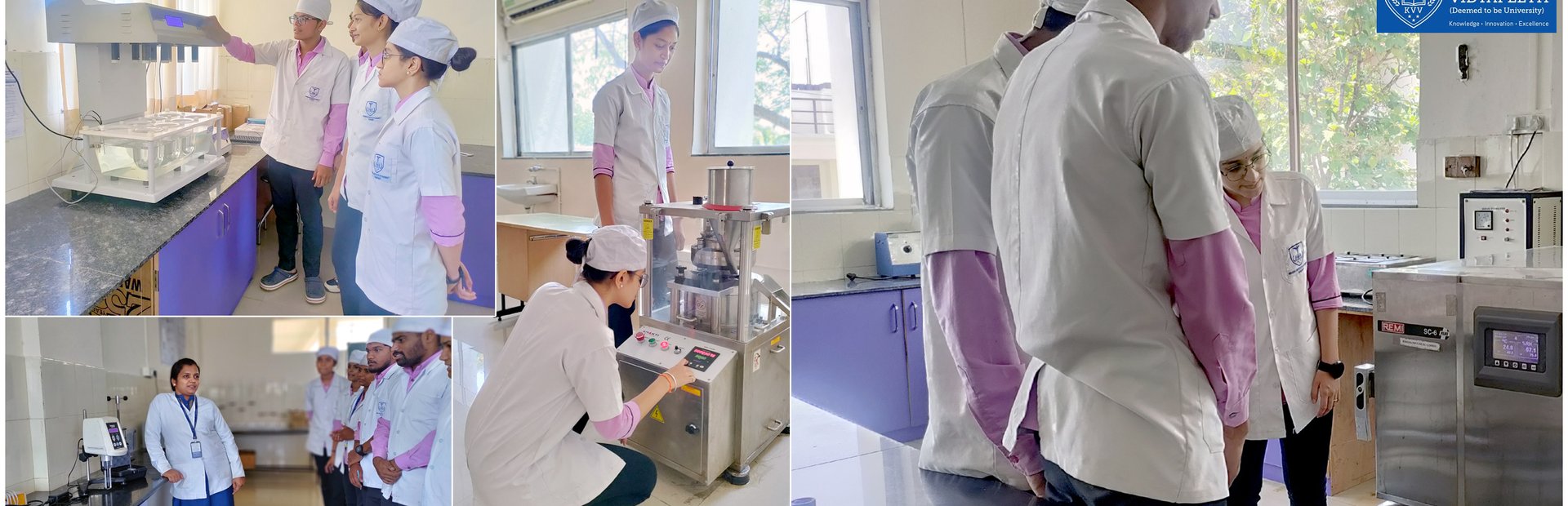
The Department of Pharmaceutics at Krishna Institute of Pharmacy strives to offer students a comprehensive education in the field of pharmaceutics. Our department is dedicated to ensuring that our graduates have the requisite knowledge and skills to meet the changing demands of the healthcare industry. Our broad curriculum encompasses topics such as biopharmaceutics, drug delivery systems, pharmaceutical microbiology, biotechnology, and the formulation and development of pharmaceutical products. Our experienced faculty members are dedicated to cultivating a supportive learning environment for students and utilize innovative teaching techniques and state-of-the-art technologies to provide a well-rounded education. The faculty members are also actively involved in cutting-edge research in areas such as novel drug delivery systems, crystal engineering, drug bioavailability enhancement and nanotechnology and encourage students to participate in research projects and publications. Our department is equipped with advanced facilities, including well-equipped laboratories with cutting-edge instruments such as the ATR-FTIR spectrophotometer, Brookfield viscometer, automatic diffusion cell apparatus, cooling centrifuge, lyophilizer, rotary evaporator, stability chamber, and more. In collaboration with industry partners and research institutions, we offer students opportunities for hands-on learning and research experience. Our focus on excellence and innovation is aimed at preparing the next generation of pharmaceutical scientists who will have a positive impact on society. Under the umbrella of pharmaceutics department we are having three post graduate programs namely M.Pharm in pharmaceutics, Regulatory affairs and Pharmaceutical Quality Assurance.
Our Vision
Our vision is to establish as a centre of excellence in pharmaceutics through pioneering contributions to research and education.
Our Mission
- Provide exceptional education and training in pharmaceutics, empowering students with the knowledge and skills essential for successful careers in the pharmaceutical industry, academia, or research
- Strive to lead groundbreaking research in drug delivery systems and formulations, developing innovative approaches that improve therapeutic outcomes and address unmet medical needs
- Actively nurture collaborations and partnerships with industry, regulatory bodies, and healthcare organizations. Our aim is to facilitate knowledge exchange, technology transfer, and professional development opportunities for faculty, students, and researchers
- Advocate for ethical practices, professionalism, and a steadfast commitment to enhancing patient care through the responsible development and use of pharmaceutical products
Objectives
- To provide high-quality education and training in pharmaceutics, ensuring students receive a strong foundation in pharmaceutical sciences, drug delivery systems, and formulation development.
- Conduct innovative research in pharmaceutics, focusing on the development of new drug delivery technologies, formulations, and therapies to address current and emerging healthcare challenges.
- Foster collaborations with pharmaceutical industries, research institutes, regulatory agencies, and healthcare organizations to facilitate knowledge exchange, collaborative research projects, and internships, preparing students with industry-relevant skills and enhancing their understanding of real-world pharmaceutical practices
- Contribute to the improvement of society and healthcare outcomes by developing patient-cantered drug delivery systems, promoting rational drug use, advocating for improved medication access, and actively participating in public health initiatives
Teaching Methodology
- Interactive teaching-learning approach that combines traditional methods with modern technologies to enhance student engagement and knowledge retention
- Demonstrations of various drug delivery systems and techniques
- Analyzing case studies related to successful and unsuccessful drug delivery approaches can help students apply theoretical concepts to real-world scenarios
- Interactive workshops and seminars can facilitate discussions on recent advancements, challenges, and emerging trends in drug delivery.
- Assigning group projects related to drug delivery system design, optimization, or analysis fosters teamwork and collaboration
- Visits to pharmaceutical companies, research institutions, or manufacturing facilities specializing in drug delivery can provide practical exposure
- Reading and discussing research articles in a journal club setting can enhance critical appraisal skills
- Problem Based learning involves presenting students with real-world problems related to drug delivery and guiding them to find solutions through self-directed learning
- Collaboration with industry partners for research projects or internships enhances practical knowledge.