Radio-diagnosis
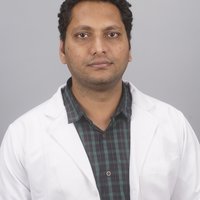
Head of Department
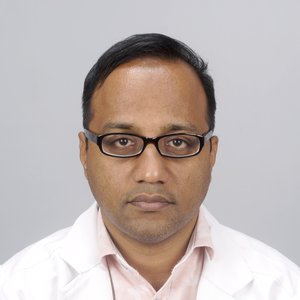
Dr. Asif Ibrahim Tamboli
Professor & Head.
Department Hub
About the Department
The Department began function in the year 1982 as integral part of the hospital with two fixed X-ray units and mobile unit to offer services. Over years in 1986 USG units were inducted. The CT scan unit was acquired in 1991 and MRI in 2007, facilities kept getting on added and upgraded over the years. Today, the department has 6 fixed X-ray units with image intensifier and 8 mobile X-ray units with computerised Radiography Units. Mammography, DSA completes the X-Ray division. There are 5 USG units with Doppler and elastography function. 16 slice Multi-detector CT and 1.5 Tesla MRI Unit complete the sonography CT and MRI divisions. The department has a PACS system with dedicated work stations with aim of filmless functioning. There is a museum depicting historical event in imaging. Over 80000 examinations are performed in a year, which include plain x-rays, special investigations mammographies, angiographies, CT studies, Neuro-radiology MRI and guided intervention procedures.There is dual functioning of the department with services to patient and undergraduate and postgraduate training programme. The teaching faculty includes 3 professors, 2 associate professors, 3 assistant professors and 5 post-graduate senior residents, who are engaged in activities of teaching and research. There are at present 28 post-graduate students registered for MD and 2 post-doctoral fellowships. The UG programme consists of 15 days SGT & 12 days LGT. The PG programme consists of seminars, case discussions, webinars, mock examinations, dissertations, short term research projects and publishing research papers. Over years, the department has trained 59 MD & 39 DMRD graduates. The Department has published 66 papers in various periodicals.
Our Vision
To progressively improve the quality and attain excellence at the national and global level in the field of medical imaging modern diagnostic methods and research and to produce personnel of high calibre and competence to deliver integrated health care to all strata of the community.
Our Mission
To incorporate and effectively implement newer technology in teaching learning and evaluation to make globally competitive, competent and confident Radiologists who will engage in ethical practice of the science and art of imaging. To inspire the sense of inquisitiveness and ignite the spirit of research in the students & the faculty.
Objectives
To Provide
- Quality multi modality imaging.
- Accurate and timely diagnostic information.
- Outstanding education
- High quality research.
To Deliver
- To our technicians, under graduates, and postgraduate residents the best possible training and aim to achieve the highest levels of professional excellence.
In order to elevate the standards of Radio diagnosis and Medical education and
services to the community we are adopting following methods of newer teaching
technology:
Teaching the practice of evidence based Radiology by:-
Conducting Seminar and Journal clubs ,the digital library where the postgraduates are encourged to search the net for the evidence, critically appraise the available evidence and identify the best evidence.
- Making net search mandatory in PG teaching programs
- Making PG teaching program on power point presentation
- Incorporation of relevant video clips in the PG teaching programmers.
- Problem Solving interactive case presentation.
- Conducting regularly the CMEs , mock PG practical exam and hands on workshop are regularly.
- To promote research and encourage publication by encouraging the faculty to publish the works in indexed journals.
Infrastructure
Fixed X ray unit- 07 ( 300 to 800mA with II)
Mobile X ray units-10
C-Arm with IITV-05
16 Slice MDCT Emotion -16 (Siemens)- 01
Ultrasound -08
MRI 1.5 T Avanto – 01
Mammomat Select Mammography-01
Computerised Radiography System-03
Digital Radiography System-01
PACs-01
Teaching Methodology
X-ray , CT, MRI films of Unique cases ,Since 20 yrs.
Chalk and board.
Power point presentation.
Charts, CDs of important ,unique cases.
Case demonstrations.
Use ICT methods to support Lectures.
Evaluation: Periodic tests in Theory & Practical Exam.
Team based & Evidence based learning.