Psychiatry
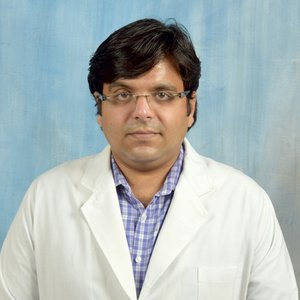
Head of Department
Dr. Ajish Gopinath Mangot
Professor & Head.
Department Hub
About the Department
Psychiatric services at Krishna Hospital first began as part of the Department of Medicine in the year 1984. In 2011 the department branched out into an independent one with a separate admission facility and is currently the only State Mental Health Authority approved facility in Karad, as per Mental Healthcare Act 2017. The department has adequate staff, is equipped with modern / state of the art facilities, and provide psychiatric teaching and training to under-graduate / post-graduate students.
Apart from these, we provide extensive skills-training and innovative mental health services to students (through Students’ Guidance Cell) and staff. We have various collaborations to provide clinical, psychological support, self-help and awareness services / activities within and outside the institute. We have also received number of copyrights and extramural research grants. Our faculty members have served important positions in the institute as well as various regional/state/national psychiatric societies.
Our Vision
To promote knowledge and application of modern psychiatric principles & research in order to create empathetic medical professionals capable of providing meaningful psychiatric services & raising psychiatric awareness in all corners of the world
Our Mission
To impart basic knowledge of psychiatry through innovative teaching learning methods; motivate students to have sound knowledge of psychiatry for enhancing good clinical practice and create competent students with excellent knowledge, research attitude and human values
Objectives
- Provide leadership in the country for the development of mental health services at various levels
- To impart training & develop health education materials for both professionals and non-professionals in the field of mental health
- To develop programs and service models in mental health care at various levels
- Conduct continuing medical education programmes & conferences
- To develop national and international collaborations for research
- To develop specialized training programs in various areas of interest like Child Mental Health, Community Mental Health, Family Mental Health, De-addiction and Psychotherapy.
- To observe all possible ‘World Days’ of significance for spreading awareness among local individuals eg. World Schizophrenia Day, Mental Health Day, Suicide Prevention Day, to name a few.
Infrastructure
|
Sr No |
Name of items |
Name and number |
| 1 |
Electroconvulsive therapy machine with ECG & EEG monitoring |
1 |
| 2 |
Electroconvulsive therapy machine without monitor |
3 |
| 3 |
Video EEG machine (32 channel) |
1 |
| 4 |
Biofeedback instrument set |
1 |
| 5 | Museum Instruments | |
| A) 3D Models |
1) Brain with Arteries 2) 329A – Brainstem 3) Spinal Cord in Spinal Canal 4) Male Genital Organs 5) Female Genital Organs |
|
| B) Charts |
1) The Neuron and the Synapse 2) Structure and Functions of Human Brain 3) Central and Peripheral Nervous System 4) Structure and Functions of Endocrine System 5) Memory Model 6) Role of Autonomic Nervous System in Emotional Arousal and Calming the Body 7) Cognitive Therapies Techniques 8) Comparisons in Psychotherapies 9) Piaget's Stages of Cognitive Development 10) Erikson's Stages of Psychosocial Development 11) Kohlberg's Stages of Moral Development 12) Maslow's Hierarchy of Needs |
|
| C) Posters |
1) Burrhus Frederic Skinner 2) Carl Gustav Jung 3) Ivan Petrovich Pavlov 4) Martin E.P. Marty Seligman 5) Sigmund Freud |
|
| 6 |
Psychological Testing Instruments |
|
| A) Projective tests |
1) ROR - Rorschach Inkblot Test 2) TAT – Thematic Apperception Test (Indian Adaptation by Uma Chowdhury) 3) CAT – Children Apperception Test (Indian Adaptation by Uma Chowdhury) 4) Sack’s Sentence Completion Test |
|
| B) Intelligence tests |
1)WAIS – Wechsler Adult Intelligence Test 2) MISIC – Malin’s Intelligence Scale for Indian Children |
|
| C) Personality tests |
1) MMPI-2: Minnesota Multiphasic Personality Inventory -2 2) NEO-PI: The Revised NEO Personality Inventory 3) EPQ-R: Eyesenck’s Personality Questionnaire - Revised 4) HSPQ – High School Personality Questionnaire |
|
| D) Neuropsychological tests |
1) PGI Battery of Brain Dysfunction 2) Wechsler Memory Scale 3) Bender Visual Motor Gestalt Test 4) AIIMS Neuropsychological Battery |
|
| 8 | Repetitive Transcranial Magnetic Stimulation | 1 (US FDA Approved Neuro-MS/D Transcranial Magnetic Stimulator from Neurosoft, Russia) |
Teaching Methodology
UG – Theory lectures, self-directed learning, tutorials, seminar, video demonstration, role play, debate, quiz, beside clinic, directly observed procedural skills sessions etc
PG – Theory lectures, seminars, case presentation, journal club, movie club, debate, quiz, teaching under-graduate students, online MOOCs, conferences, workshops, CME, etc.