Biochemistry
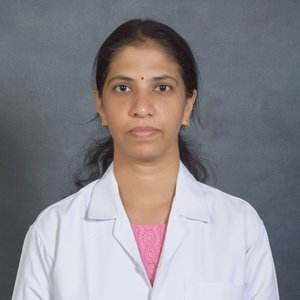
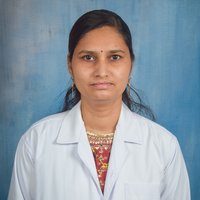
Head of Department
Dr. Axita Chandrakant Vani
Professor & Head.
Department Hub
About the Department
Established in year 1984.
Programs : Undergraduate, postgraduate, Fellowships programs
Department has adequate Teaching and Non-teaching staff
Biochemistry has a major role in modern medicine
Biochemistry helps us in knowing the status of various tissues like liver, kidneys, pancreas etc.
It will provide us with answers for cancer, ageing process and gene therapy
It is an important tool in the diagnosis and prognosis of various diseases.
Our Vision
To train students of biochemistry in the science of life process at the molecular level and orient them towards application of knowledge acquired, in solving clinical problems.
Our Mission
To produce competent personnel with ethical values and up to date knowledge in the subject for rendering quality health care & education to the community.
Objectives
The main goal of teaching Biochemistry to students, is to have a sound knowledge of various biomolecules present in living cells and organisms. To orient them towards molecular level of all the chemical reactions associated with living cells and apply this knowledge in maintenance of health and effective treatment of diseases.
At the end of the course the student should be able to describe the structural and functional organization of cell and its subcellular components.
Understand the chemistry and biological significance of various biomolecules like carbohydrates, proteins, lipids and haemoglobins.
Have a sound knowledge of enzymes in respect to mechanism of action, classification and their use in medicine.
Have clear concept about digestion, absorption, inter conversion and assimilation of various nutrients in our diet.
Know metabolisms of major biomolecules with their integration and regulations.
Be able to comprehend genes, their expression, the principles and the application of genetic engineering.
Be able to explain inborn errors of various metabolisms.
Know the mechanism of body defense, detoxification and homeostasis of body fluids and pH.
Have thorough understanding about nutrition in respect with vitamins, minerals, malnutrition and obesity.
Be able to outline biochemical basis of cancer, free radicals and
antioxidants
Get familiar with conventional biochemical investigations and their interpretations.
Infrastructure
I. Laboratories
Under graduate
Post graduate
Clinical Biochemistry
Research
Emergency
Endocrinology
Molecular Biology
KIMS Diagnostics
Lead Referral Lab.
Molecular Dignostic
Apart from routine biochemical investigations, some special investigations like; cardiac markers, tumor markers, hormone assay, vitamins, electrophoresis, VMA, lead estimation etc. are also done.
II. Seminar room
III. Museum
IV. Library
Teaching Methodology
Didactic lectures.
Self Directed Learning (SDL).
Small Group Teaching (SGT).
Problem Based Learning (PBL).
Students’ seminars.
Tutorials/Assignments.
Early Clinical Exposure (ECE).
OSPE
Quizzes
Integrated teaching
Electives
Academic / Scientific activities such as webinars, CMEs, workshops & conferences are conducted by the department regularly.
Journal club for PG students.